What is Injective in crypto?
Explore Injective, a high-performance blockchain for decentralized finance. Learn how it powers DeFi and real-world assets. Discover more today!

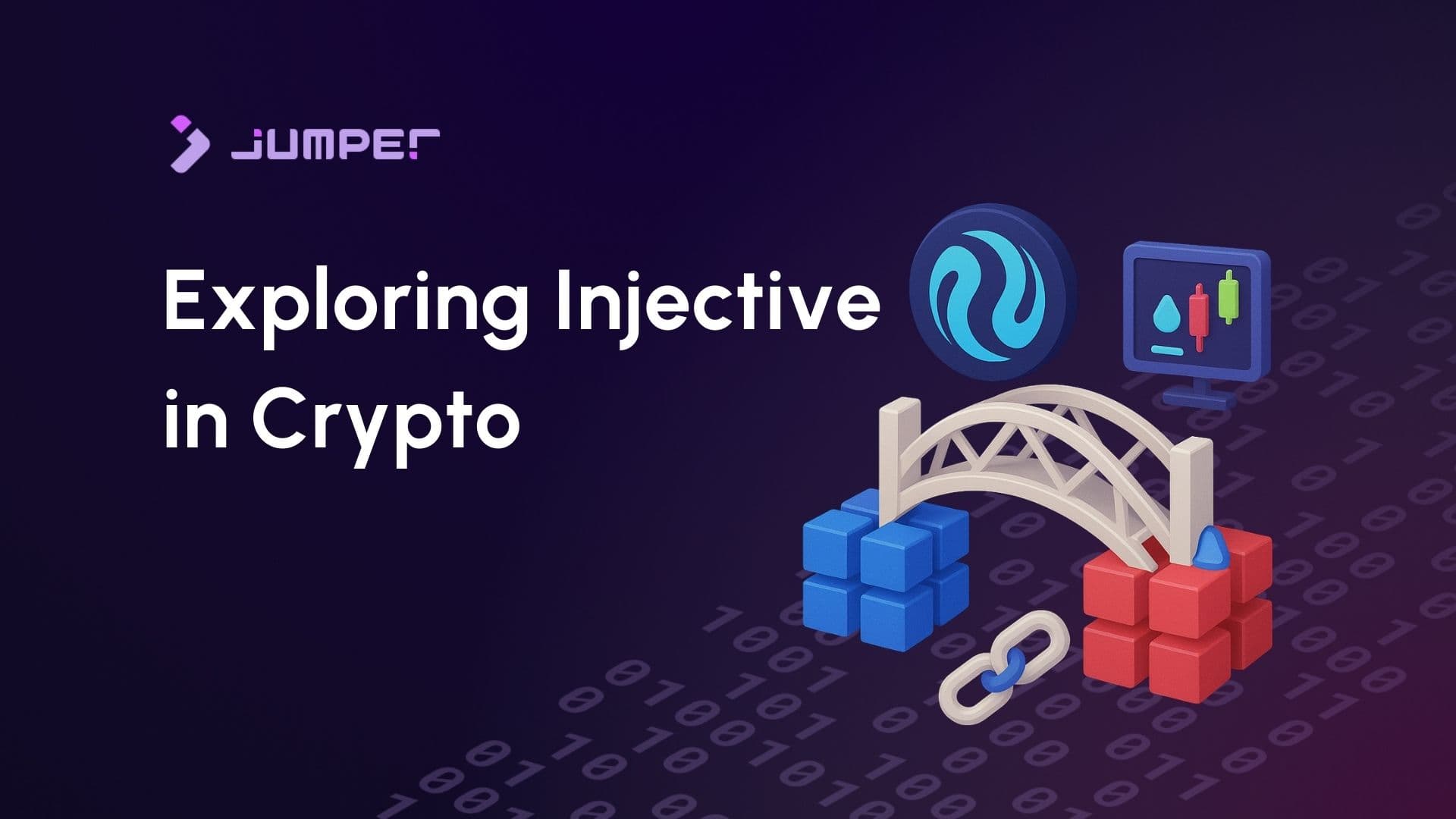
Injective Protocol is an open, interoperable layer-one blockchain tailored for decentralized finance (DeFi) and cross-chain trading. Built on a modular Cosmos-SDK framework, Injective delivers high throughput and low latency for sophisticated financial applications (see CoinMarketCap’s overview)[https://coinmarketcap.com/currencies/injective/]. For traders eager to access Injective’s decentralized exchange (DEX) features,
Jumper Exchangestreamlines the process by aggregating liquidity across Ethereum, BSC, and more—enabling you to swap assets into Injective’s ecosystem seamlessly.
At its core, Injective removes intermediaries by hosting smart contracts on its own chain, while bridging assets from other blockchains via its decentralized interoperability layer. Developers can build perpetual futures, spot markets, and real-world asset (RWA) tokenization platforms for global users. To monitor cross-chain token flows into and out of Injective, the
Jumper Scan dashboardoffers real-time insights, so you know exactly when your bridged assets have landed and can begin trading.
Understanding Layer-One Blockchains
Layer-one blockchains form the foundation of decentralized applications, handling consensus, security, and transaction processing on their native networks. Bitcoin pioneered this space with proof-of-work consensus, while Ethereum expanded functionality by introducing Turing-complete smart contracts. Yet Ethereum’s network congestion and high gas fees spurred the development of alternative layer ones—like Solana, Avalanche, and Injective—that prioritize speed, cost efficiency, and specialized features.
Injective’s architecture departs from traditional layer ones by separating its execution layer from settlement and interoperability. Transactions execute on the Injective chain, benefiting from Tendermint’s instant-finality consensus, then use IBC (Inter-Blockchain Communication) to settle cross-chain transfers. This model reduces on-chain load and maintains security, allowing Injective to handle hundreds of transactions per second at minimal cost. For users bridging tokens onto Injective to access its DEX,
Jumper Exchangebundles approvals and routes seamlessly, avoiding manual, multi-step bridges.
The Vision Behind Injective
Injective’s founders set out to build a truly open financial ecosystem where anyone can launch markets without permission. Traditional finance relies on centralized exchanges and gatekeepers; Injective flips that model by offering decentralized order books, cross-chain markets, and programmable trading logic. The goal: democratize access to advanced financial instruments—like perpetual swaps and cross-margin trading—without compromising on decentralization or security.
By tapping into Cosmos’s IBC standards, Injective aims to bridge liquidity across disparate DeFi ecosystems. This interoperability fosters a network effect: liquidity from Ethereum and Binance Smart Chain can flow into Injective markets, enhancing depth and reducing slippage. Community-driven governance further steers protocol upgrades, ensuring no single entity can stall progress. Traders interested in testing new markets can follow step-by-step guides on the
Jumper Learn hubto bridge in assets and deploy strategies in minutes.
Key Features of Injective Protocol
Interoperability and Cross-Chain Functionality
Injective’s IBC-powered bridges allow assets from Ethereum, BSC, and other Cosmos chains to move into Injective. This cross-chain design opens access to deep liquidity pools and diverse token pairs, all tradable on Injective’s DEX. Think of it like having multiple liquidity sources funneled into one market. Tools such as
Jumper Exchangemirror this by aggregating DEX liquidity, so you can swap tokens and automatically route them into Injective without juggling separate bridges.
High Performance and Scalability
Through Tendermint consensus and optimized block propagation, Injective finalizes transactions in under two seconds with throughput exceeding 1,000 transactions per second (TPS). This stands in contrast to Ethereum’s 15–30 TPS, making Injective ideal for high-frequency trading and complex DeFi primitives. Low fees—often a fraction of a cent—keep costs predictable. For active traders, fast confirmations are essential; cross-chain swap platforms like
Jumper Exchangeensure you capture best-execution routes without delay.
Decentralized Trading Infrastructure
Injective offers a fully decentralized order book model, unlike many AMM-based DEXes. Users place limit or market orders, matched peer-to-peer on-chain. There’s also support for derivative markets—perpetuals, futures, and options—without KYC. Validators secure the network and earn staking rewards, while governance token (INJ) holders vote on protocol parameters and fee allocations. To diversify across these markets, you can convert other assets into INJ or stablecoins via the
Jumper Scan tooland begin trading instantly.
Real-World Use Cases
DeFi Applications
Injective hosts lending platforms, yield farms, and algorithmic trading bots that require fast execution and deep liquidity. Developers can deploy custom markets—such as USDC/INJ perpetuals—using Injective’s SDK. Liquidity providers earn fees from both swap and futures markets. For those looking to funnel capital into these opportunities,
Jumper Exchangesimplifies token routing, letting you DCA into INJ or USD-pegged stablecoins across multiple chains automatically.
Real-World Asset Tokenization
Beyond crypto-native tokens, Injective’s permissionless markets allow tokenizing real-world assets—like tokenized treasury bills, commodity futures, or real estate shares—on-chain. Smart contracts enforce compliance rules, record ownership, and automate dividends or interest payments. Institutions exploring RWA issuance can bridge fiat-stablecoins into Injective, then launch new asset markets. Platforms like
Jumper Exchangehelp move funds from fiat on-ramps or other chains into Injective for issuance and trading with a few clicks.
Prediction Markets and NFTs
Prediction markets—where users bet on future events—benefit from Injective’s speed and order-book design. Markets on election outcomes, sports events, or economic indicators settle automatically via oracles. NFTs also flourish, with low minting costs and secondary-market trades settled in real time. Artists or event organizers can issue NFT collections on Injective and track sales. If you hold NFTs on Ethereum or Polygon, Jumper Learn’s step-by-step
guideshows how to bridge them over to Injective’s NFT marketplace for listing.
How Injective Differs from Other Blockchains
While Ethereum and its Layer 2s focus on general-purpose smart contracts, Injective zeroes in on financial primitives. Its decentralized order books set it apart from AMM chains like Uniswap clones, giving traders precise control over execution and price. Unlike centralized exchanges, there’s no custodian risk or KYC requirements—Injective’s non-custodial model means you retain self-custody of your assets at all times.
In comparison to Solana or Avalanche, Injective’s IBC interoperability ensures direct connections to the broader Cosmos and Ethereum ecosystems, rather than building bridges from scratch. This unified connectivity attracts developers seeking multi-chain composability. When moving collateral into Injective to access lower fees and faster trades, cross-chain aggregators like
Jumper Exchangereduce the friction by handling routing, approvals, and slippage optimization under one interface.
Getting Started with Injective
To begin, install a wallet that supports Cosmos-based chains—like Keplr or Leap—and add the Injective network using the official RPC endpoint found on Injective’s docs. Don’t ship assets yet: first test on Injective’s Goerli testnet by bridging teststablecoins via the
Jumper Learn hub. Once familiar, bridge real tokens using the Jumper interface by selecting your source chain (Ethereum, BSC, etc.) and your target (Injective).
After receiving assets, navigate to Injective’s DEX at https://app.injective.com, connect your wallet, and begin trading. You can place spot or perpetual orders, provide liquidity, or stake INJ to become a validator. For yield farming or algorithmic strategies, explore dashboards on DeFiLlama or DefiStation to find high-APY opportunities and track your performance.
Future Roadmap and Community Growth
Injective’s roadmap focuses on improving user experience, governance, and expanding cross-chain integrations. Upcoming milestones include:
- Batch Order Matching: Grouping orders for reduced gas and faster settlement.
- Order Book Upgrades: Enhanced UI/UX and new order types (stop-loss, take-profit).
- Interchain Derivatives: Futures markets for tokens from other Cosmos zones.
- Governance 2.0: On-chain referenda and treasury-managed grants for community projects.
The Injective Community Forum and Discord channels host regular AMAs, hackathons, and grant announcements. Contributors can earn bounties by building new market templates or relayer infrastructure. As the ecosystem matures, tools like
Jumper Exchangewill continue to bridge emerging chains into Injective, ensuring liquidity flows where developers and traders need it most.
Accessing Injective’s DeFi with Jumper Exchange
Cross-chain DeFi on Injective demands smooth asset transfers from diverse blockchains. Jumper Exchange simplifies this by combining multiple bridges and DEX routes into a single transaction. You select your starting token—be it ETH, BNB, or USDC—then choose Injective as the destination, and Jumper’s smart-routing engine finds the fastest, cheapest path. This eliminates manual approvals and reduces slippage. The integrated
Scan dashboardlets you watch your transfer in real time, so you know exactly when funds are ready for trading on Injective’s DEX.
For newcomers, the
Learn huboffers tutorials on setting up wallets, configuring gas fees, and automating recurring swaps. Their
step-by-step guidewalks you through your first cross-chain trade from Ethereum to Injective’s testnet or mainnet. By abstracting bridge complexities, Jumper frees you to focus on strategy—whether that’s staking INJ for governance, providing liquidity in perpetual markets, or exploring real-world asset tokenization.
Injective’s Emerging Frontier
Injective Protocol stands out as a purpose-built layer-one blockchain for finance, combining interoperability, high performance, and a decentralized trading infrastructure. Its permissionless markets, cross-chain bridges, and community-driven governance position it to lead the next wave of DeFi innovation. As more developers and institutions launch markets—ranging from traditional derivatives to real-world asset tokenization—Injective’s ecosystem will grow in depth and diversity.
By harnessing tools like Jumper Exchange for seamless cross-chain asset management, traders and builders can unlock Injective’s full potential without technical friction. Whether you’re seeking low-cost trades, novel DeFi products, or tokenized real-world assets, Injective offers a compelling platform—and with Jumper handling the bridges, you can focus on capturing opportunities and driving the decentralized economy forward.
Relevant Links
- Injective Official Site
- CoinMarketCap: Injective Overview
- Jumper Exchange
- Jumper Scan Dashboard
- Jumper Learn Hub
- Jumper Step-by-Step Guide
- Ethereum Official Site
- Cosmos IBC Documentation
- Injective Protocol Docs